
How Real Estate Agents Can Scale Without Burning Out
Growing your real estate business should not require answering messages all night, posting constantly, and trying to manage every detail
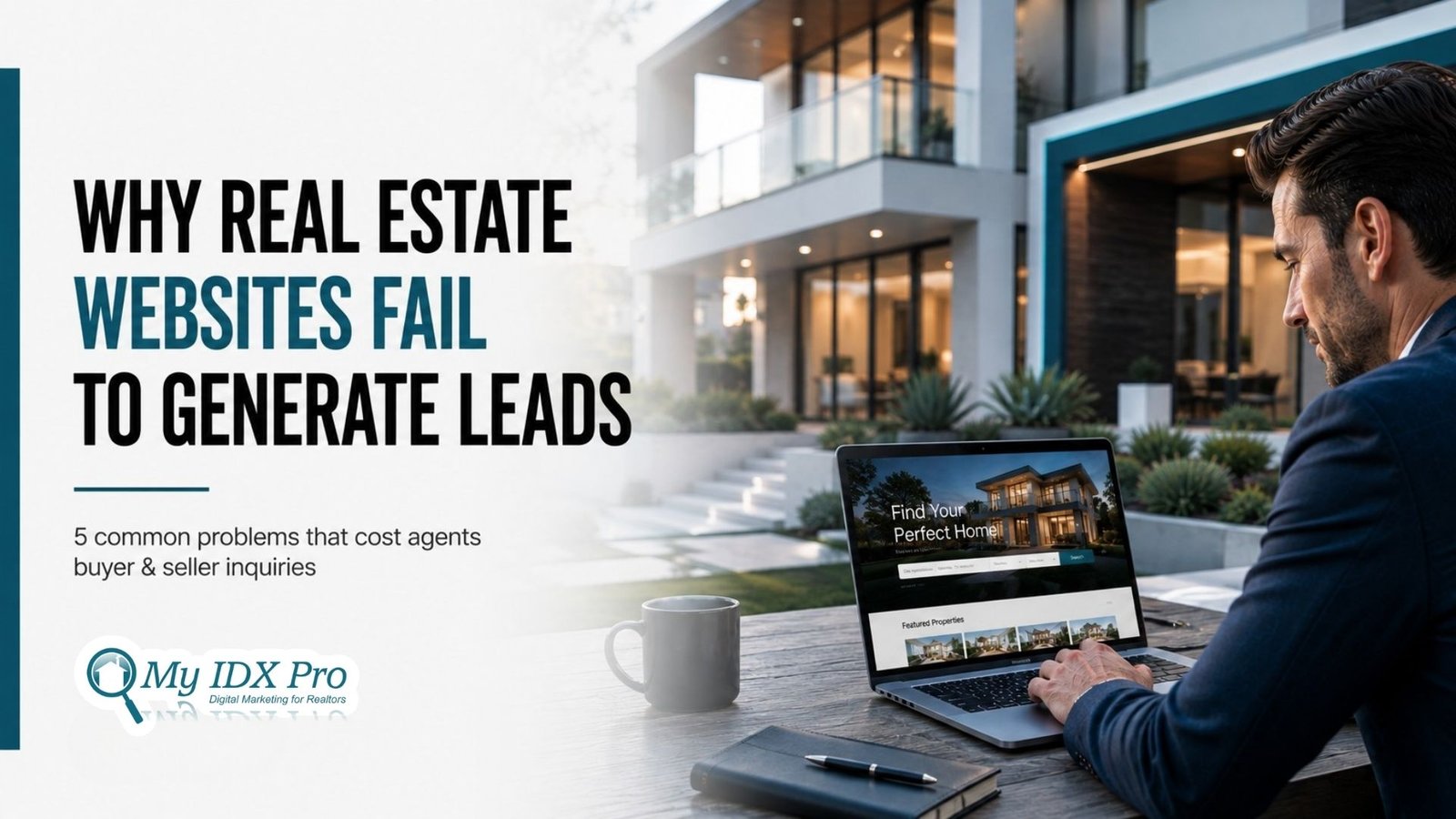
A real estate website can look polished, have an IDX search, and still generate very few buyer or seller inquiries.
That is frustrating, especially when you are investing in ads, posting on social media, building listings pages, or working to improve your Google presence. But in many cases, the problem is not just traffic. It is that people cannot easily find, trust, or choose you once they land on your website.
In 2026, your website is part of a bigger visibility system. Buyers, sellers, and referral partners may find you through Google, Google Maps, reviews, social profiles, or AI-generated recommendations before they ever visit your site. If your online presence sends weak or inconsistent trust signals, they may be directed to another agent before you have a chance to earn the conversation.
and identify the website, IDX, review, and profile gaps that may be costing you inquiries.
Here are the most common reasons real estate websites fail to generate leads, and what to fix first.
Visitors should not have to figure out whether you work in their area, understand their situation, or offer the type of guidance they need.
A generic headline like “Your Local Real Estate Expert” does very little to separate you from every other agent in the market. When your message is vague, visitors may browse a few pages and leave without taking action.
For example, a message such as “Helping [City] homeowners sell with a smarter local pricing strategy” gives a seller much more context than a generic welcome statement.
An IDX search is useful, but it does not automatically turn visitors into leads.
If buyers can browse listings without seeing a compelling reason to save a search, request alerts, or ask a question, they may simply return to a larger portal or compare multiple agents. A functional search tool is not the same as a lead-generation experience.
Your IDX setup also affects the first impression your brand makes. A confusing or outdated experience can weaken trust even when the listings themselves are accurate.
“Contact Us” asks a visitor to do too much mental work.
Buyers and sellers are more likely to respond to a specific offer that matches what they are trying to accomplish. A buyer may not be ready to contact an agent, but they may want off-market opportunities, listing alerts, or help narrowing down neighborhoods. A seller may not want a sales call, but they may want a clear picture of their home’s market position.
The best CTAs reduce uncertainty. They make the next step feel useful, low-pressure, and relevant to the visitor’s goals.
A website cannot generate leads if prospects do not trust the person behind it.
People often research agents across several places before reaching out. They may check Google results, reviews, agent profiles, social media, websites, and increasingly, AI-driven search experiences. If your reviews are thin, your profiles are inconsistent, or your website does not clearly communicate local expertise, another agent may look like the safer choice.
This is the trust gap: you may be a strong agent offline, but your digital presence does not make that clear enough online.
Many agents can see website visits but cannot identify what happens after the click.
Are people finding you on Google? Are other agents appearing above you? Are visitors leaving because the website is unclear, the IDX search is difficult, or the offer is not compelling? Without answers, it is easy to spend money on traffic while missing the actual issue.
A better website strategy starts with knowing what prospects see, what competitors are doing better, and where your lead flow is leaking.
More traffic is not always the answer. Before investing more in ads, content, or SEO, make sure buyers and sellers can find you, trust you, and take a clear next step when they do.
Our Free AI Visibility Audit for Realtors is designed for solo agents and top producers who want a practical view of how they appear in Google and AI search, which agents are more visible, and how their website, IDX setup, reviews, and profiles may be affecting inquiries. You receive clear, prioritized opportunities, not a technical report full of jargon.
Request Your Free AI Visibility Audit
See how buyers, sellers, and referral partners may be finding, or skipping, your business online.
We’ll review your Google and AI visibility, website and IDX strength, reviews and reputation signals, and the highest-impact actions to improve your inbound lead flow.
and trust signals influencing whether buyers, sellers, and referral partners choose you or another agent.
Growing your real estate business should not require answering messages all night, posting constantly, and trying to manage every detail

Your real estate website should do more than look professional. It should help buyers and sellers quickly understand who you

Get a Fully Optimized Real Estate Website No Setup Fee for St. Patrick’s Day!